An unbranded amber bottle and a plain tumbler resting on a linen cloth on a wooden ledge beside a dusk window

Ingredient and Format Guide

Reading Supplement Labels

Softgel, tablet, capsule, sachet, blend. This guide explains what those words mean in an everyday routine, which ingredient families usually arrive in which format, and how to tell in about a minute whether a product fits the way you already take your supplements.

Softgel With a meal Cabinet, not car All year Vitamin D3 and omega-3 are the everyday examples — one piece, sealed, no preparation.

A label is a short document, and it follows rules

Most supplement packaging sold in Indonesia assumes you already know the vocabulary. It prints a format word, an ingredient amount, a serving size and a storage line, and leaves you to sort out which of those numbers belongs to your day. Reading a label is a skill, and it is mostly a skill of knowing which lines to look at first.

This page covers the practical half of that skill: what softgel, tablet, capsule, sachet and blend actually mean, which ingredient families tend to appear in which format, and how to tell within about a minute whether a product belongs in the routine you already keep. Nothing here replaces the leaflet inside the box — that is the document written for the exact product in your hand, and it carries the usage and storage instructions you should follow.

Two habits make the rest of this page easier. First, read the format word before the ingredient word, because the format tells you how the product is taken and stored. Second, decide whether you are holding a single-ingredient product or a blended one, because that changes how many lines you have to check before you can put the box down.

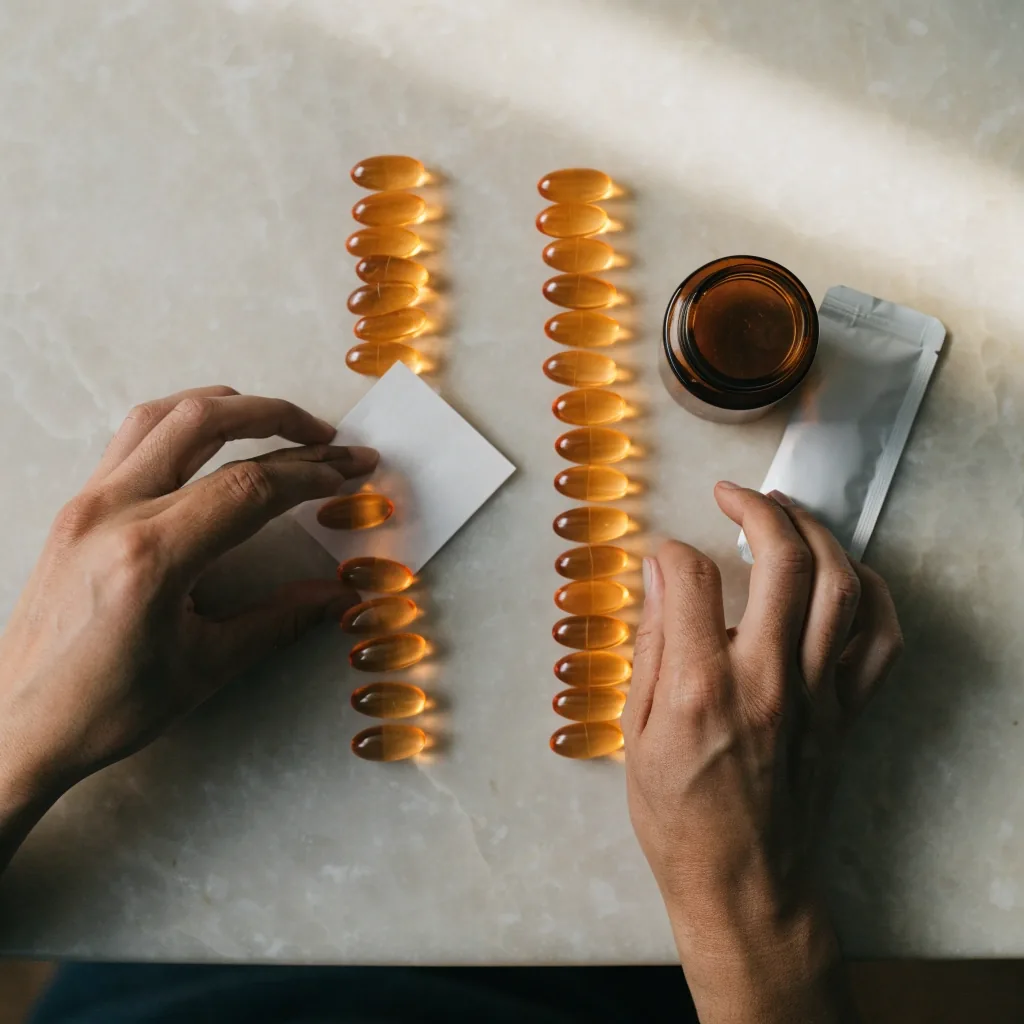
Two hands sorting plain unbranded supplement formats into two columns on a stone counter

Sorting formats first, ingredients second: two columns on a counter, no packaging copy in the way.

Five formats, and what each one asks of you

Format decides the boring parts of a routine: whether you need water, whether you need food, whether humidity matters, whether you can carry a week in a jacket pocket.

Softgel

One sealed piece
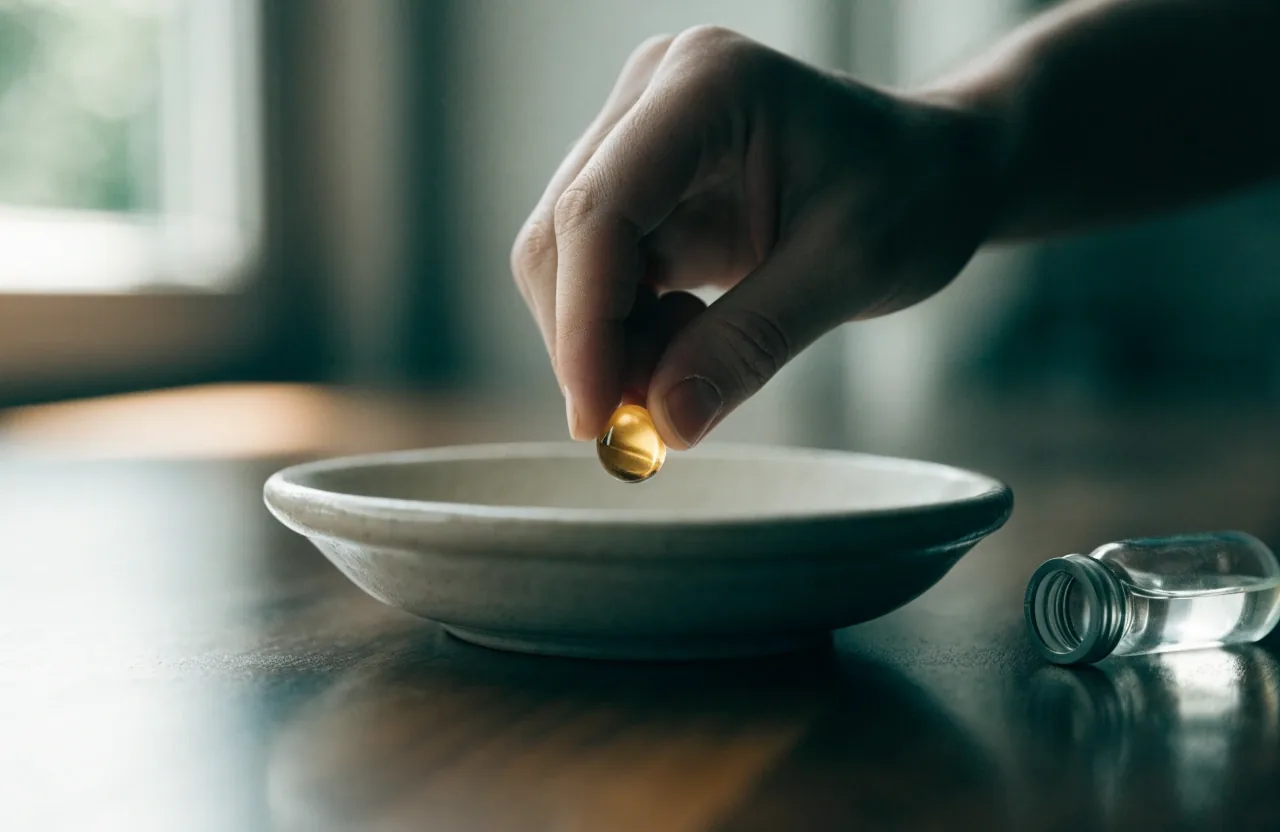
A single unbranded amber softgel on a slate chip beside a dish of clear oil

A softgel is a one-piece, sealed format with a soft outer shell, most often used for oil-based ingredients. Vitamin D3 1000 IU and omega-3 1000 mg are the clearest examples on Indonesian retail pages, and both use this format almost exclusively. Softgels are small, need no preparation, and are usually taken with food.

On the label, look for the ingredient amount per softgel and the total count in the pack, since those two numbers together decide how long the bottle lasts. Because the shell is sealed, softgels do not split or crumble the way some compressed formats can — which also means you cannot halve one to adjust a serving.
Tablet

Compressed, durable

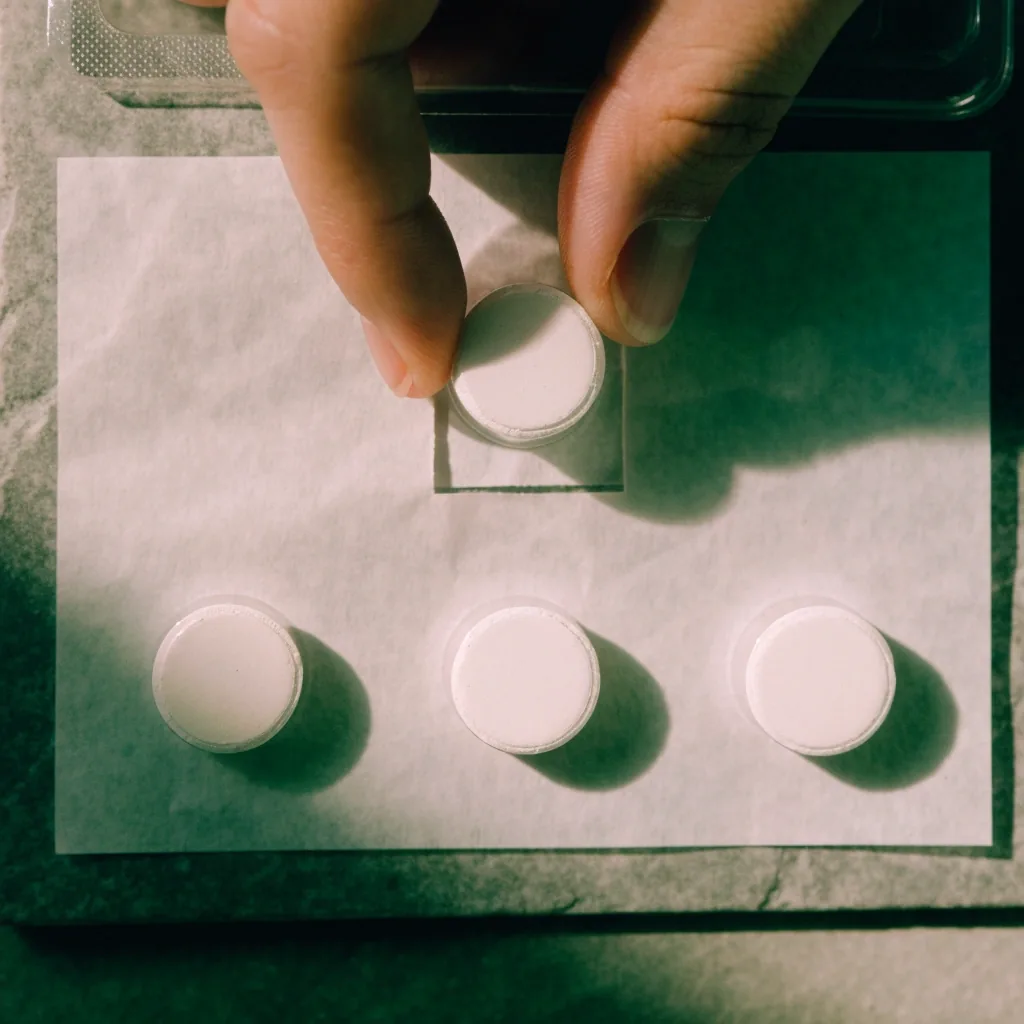
Plain unbranded white compressed supplement pieces arranged on a paper square on a stone board

Tablets are compressed, dry and comparatively durable. They survive a hot day in a motorbike bag better than most formats, which is why vitamin C and multivitamins frequently appear this way. A plain vitamin C product is a single compressed piece; the same format carrying betaglucan alongside it is a blended formula in the same shape.

When reading this kind of label, check whether the piece is scored, since a score line tells you splitting is intended rather than improvised. Then check the ingredient list for a second active beyond the headline nutrient, because blended formulas are common here and each listed ingredient deserves its own decision about whether it earns a place in your routine.

Capsule

Two-piece shell

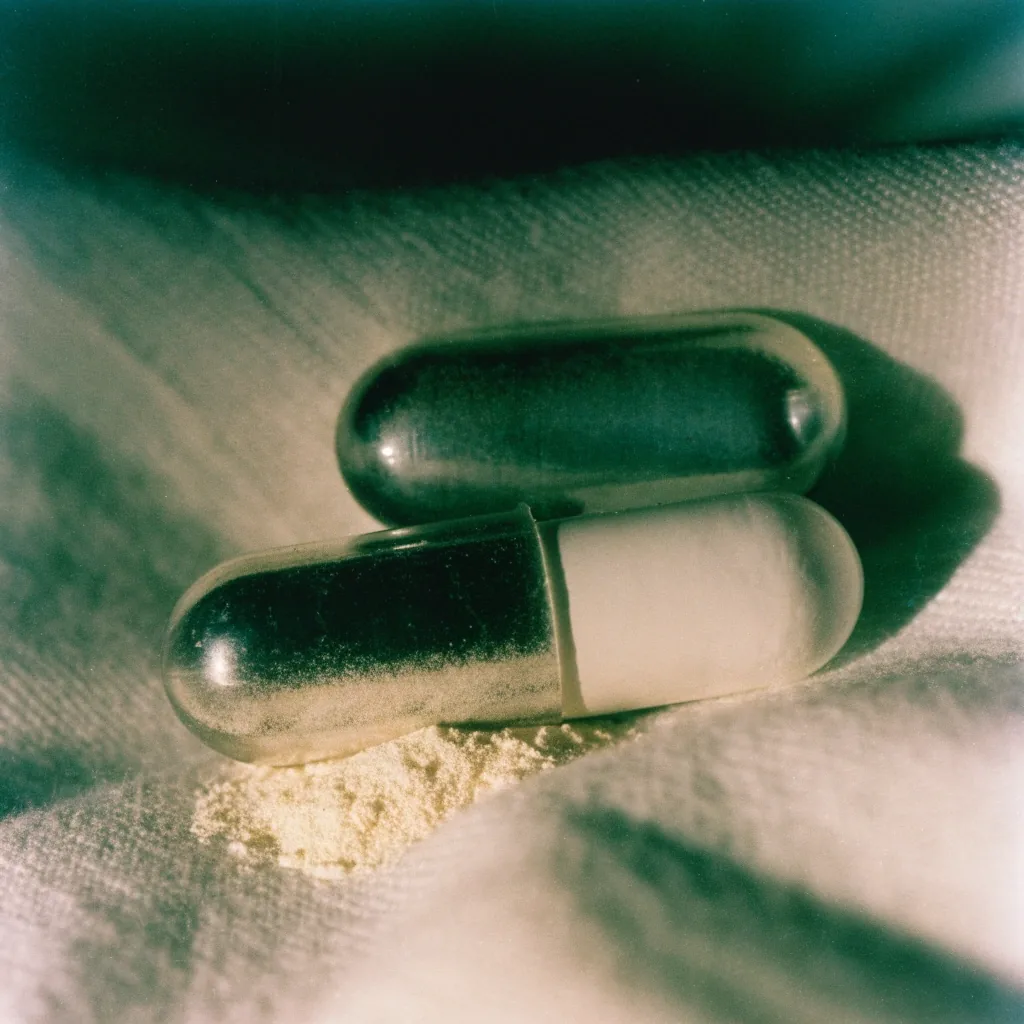
An open two-piece unbranded capsule shell beside a small mound of pale granules on linen

A capsule is a two-piece shell, usually filled with powder, granules or liquid. It sits between the compressed and the softgel format in everyday use: easier to take than a large dry piece for some people, less specialised than a sealed oil shell. Probiotic products in Indonesia often use capsules because the contents can be protected inside the shell.

On the label, the useful detail is often less about the shell and more about storage. Many capsule products ask for a cool, dry place, and the humidity in Bali and Java makes that instruction worth following rather than skimming. If a product asks for refrigeration, that is a real planning constraint for travel and for how many packs you keep at once.

Sachet

One serving, sealed

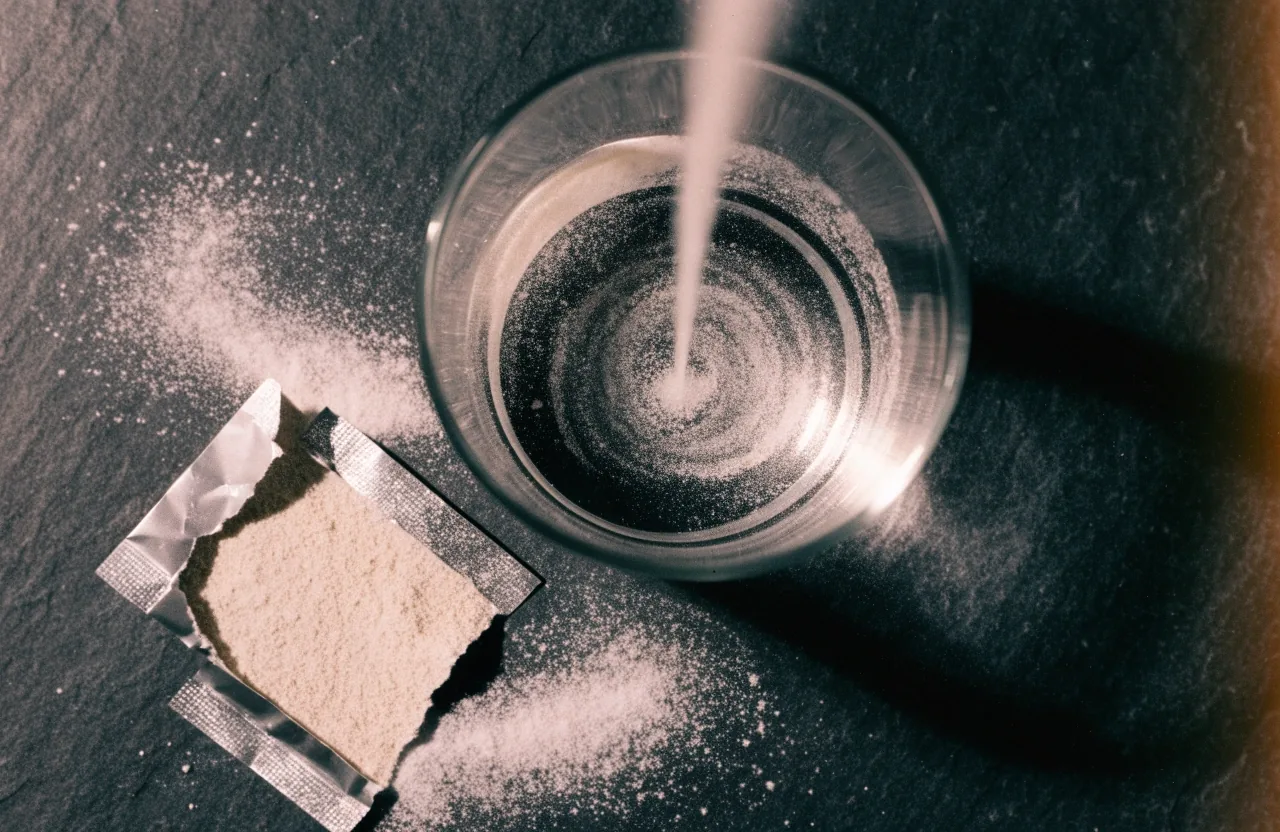
A plain unbranded foil sachet beside a glass of water on a stone counter with powder in the glass

A sachet is a single-dose powder or granule packet, mixed into water or taken directly. It is the most portable format, which is why herbal blends and probiotic powders lean toward it. If your week involves travel between islands or long commutes, sachets remove the need to carry a bottle and the need to count anything out.

The label detail to check is the serving size, because a sachet is already one serving, and the total number of sachets in the box tells you exactly how many days the pack covers. There is no guesswork about dosing and no half-empty bottle left at the bottom of a bag. What you do lose is flexibility: a sachet cannot be split into a smaller serving.

Herbal jamu blends

A roster, not a number

A small stone mortar with dried root pieces beside linen and an amber dish on a stone board

Jamu is Indonesia's traditional multi-herb category, and modern retail versions carry it forward in formats ranging from bottled liquids to powders. Jamu Komplit sits in this space as a multi-herb blend within Sidomuncul's portfolio. Tolak Angin, with roots in the 1950s, is the best-known example of a heritage jamu product that still competes in mainstream shops across the country.

Reading a jamu label is a different exercise from reading a vitamin label. The ingredient list is usually a roster of plant materials rather than a nutrient amount, and there is often no single headline figure to compare between two products. What you can compare instead is format, serving count, and whether the blend is sold as a liquid, a powder or a sachet — those are the lines that decide how it fits into a week.

Single-ingredient or blended

One number to check, or a whole list

A single-ingredient product is the easiest label in the category: vitamin D3 1000 IU or omega-3 1000 mg gives you one figure that matters. A blended formula asks you to check every listed ingredient and decide whether each one earns its place in your routine. Multivitamins sit at the far end of that scale, with long lists and a serving size that may be more than one unit per day.

There is no rule that fewer ingredients is better. What matters is knowing which type you are holding, because that decides whether you read one line or ten before you decide.

Format and routine fit

Two lanes, one honest comparison: the formats that live in a bottle and the formats that live in a bag. Read across the two columns to see which one matches the week you actually have.

Bottle formats

Softgel

With a meal, no preparation. Vitamin D3 and omega-3.

Keeps in a cupboard

Count the pieces in the pack to know how long it lasts.

Tablet

Durable for bags and travel. Vitamin C and multivitamins.

Check the score line

Blended formulas are common, so read the full ingredient list.

Capsule

General purpose, often used for probiotics.

Watch storage conditions

Cool and dry, away from the damp heat of a bathroom shelf.

Drink

A standalone habit of its own, less portable in quantity.

Built into a moment

Works when the drink has a fixed place in the day.

Pocket formats

Sachet

Single serving, most portable. Herbal and probiotic powders.

One sachet, one serving

The box count is the day count. No measuring, no half doses.

Herbal jamu blend

Bottled liquid or powder, read as a roster of plant materials.

No single figure

Compare format and serving count between two blends instead.

Multivitamin

A long list and a serving size that may exceed one unit.

Read the serving first

The serving line decides how many pieces a day actually are.

Single nutrient

Vitamin D3 or omega-3: one number, one decision.

Amount and count

The easiest label in the category to read at a glance.

Shaded interior shelf with plain unbranded glass jars, a folded box and a dried herb sprig at dusk

Storage, expiry, and what the leaflet is for

Keep products in the original container, out of direct sunlight, and away from the damp heat of a bathroom shelf. The expiry date is printed on the packaging, and it is tied to the storage conditions the manufacturer specifies. A bottle that spent months in a hot car is not the same as one that stayed in a cupboard, even when the date on the base has not moved.

The leaflet inside the box carries the specific usage and storage instructions for that product. Read it once when you open the pack. It is the only document written for that exact product, which makes it the one place to check before you change anything about how you take what is inside.

If you can tell us which format you already keep — a bottle in the cupboard, a sachet in a bag, a jar on the kitchen counter — the routine builder can sequence it with everything else you take. Warm the team instead if a label question is better answered by a person; we reply during office hours, Monday to Friday, 9:00 AM – 6:00 PM.

A dusk glasshouse corridor with ferns in long stone troughs and a hand near a leaf
Capsule Cool, dry place Palm and Java year-round Humidity is the quiet variable in this climate, and the storage line is the one that answers it.

Questions that come up while reading a label

Three answers that cover most of what people ask us about format words. If yours is not here, the questions page collects the rest.

All questions and answers

What is the difference between a capsule and a softgel?

A softgel is a sealed one-piece shell, usually for oil-based ingredients like vitamin D3 and omega-3. A capsule is a two-piece shell, typically filled with powder or granules, and is common for probiotics. On a label, that difference shows up in storage instructions more often than in the ingredient line.

Can I split a tablet in half?

Only if the piece is scored, which indicates the manufacturer intends splitting. Unscored pieces are not designed for it, and the leaflet is the place to check before you change the serving yourself.

Are jamu blends and vitamin products read the same way on a label?

No. Vitamins usually carry a nutrient amount per serving. Jamu labels list plant ingredients instead, so there is often no single comparable figure between two herbal products. Compare format and serving count instead, and let the ingredient roster tell you what is in the blend.