Taken with food, easy to swallow
Many people park vitamin D3 and omega-3 in the same meal slot, because both lean toward a softgel format and the same habit.
Talk to WellnessCore
Jl. Sunset Road No. 88, Seminyak, Kuta, Badung, Bali, 80361
Monday to Friday, 9:00 AM – 6:00 PM
English-language reading room · Seminyak, Bali
A practical English-language guide to the jamu blends, vitamin D3 softgels, omega-3, vitamin C and multivitamins sold in Indonesia — sorted by ingredient, format and the routine slot each one fills.
We focus on long term wellness supplements: the everyday vitamins and herbal blends people keep in a drawer or on a desk, not short-term gimmicks. That means vitamin C in tablet form, vitamin D3 1000 IU softgels, omega-3 1000 mg softgels, multivitamins from both imported and local brands, probiotic sachets, and heritage jamu products that have been on Indonesian shelves for decades.
Retail coverage keeps showing shelf space gravitating toward exactly these categories, which tells you where shopper attention already sits. We also cover format questions, because the difference between a tablet and a sachet often matters more to your week than the ingredient list does.
Categories we read closely
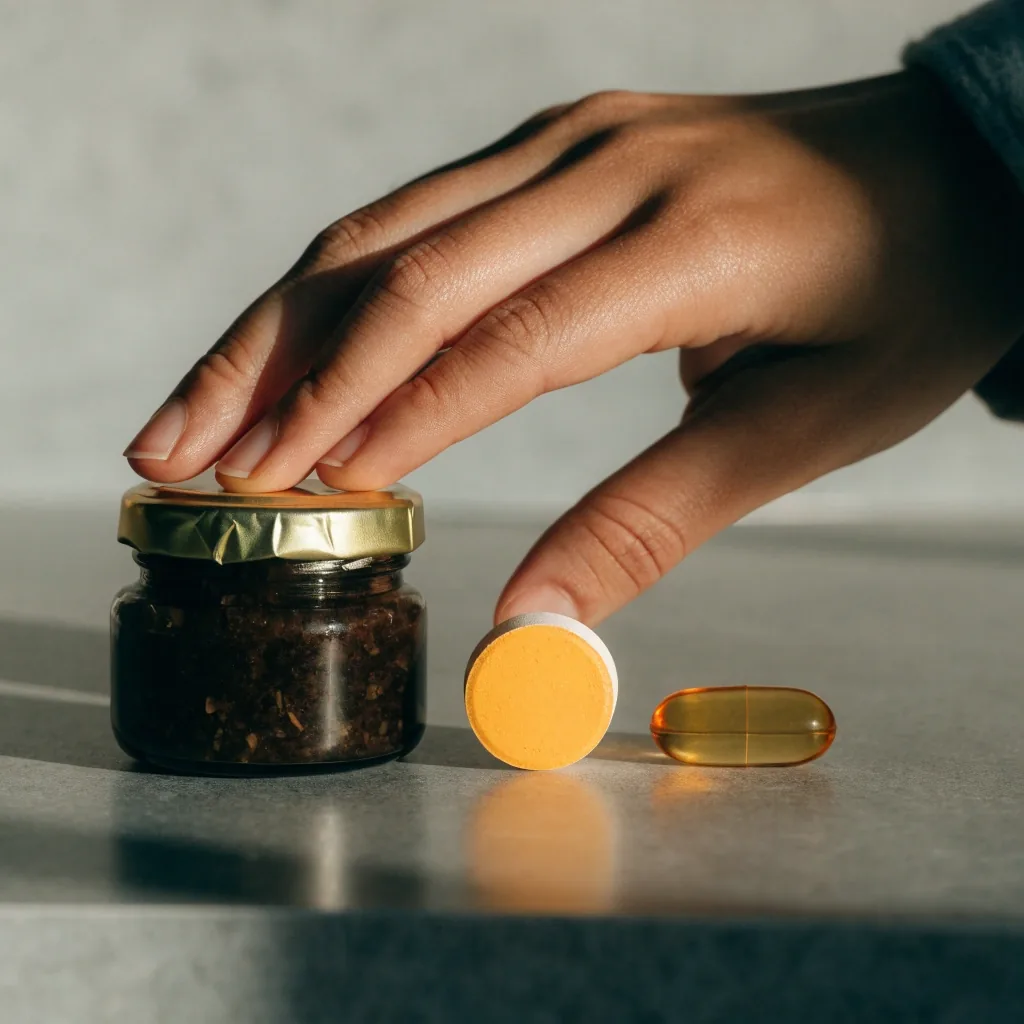
The shape of the product decides the shape of your week. Four formats, four different habits.
Many people park vitamin D3 and omega-3 in the same meal slot, because both lean toward a softgel format and the same habit.
A tablet survives a hot motorbike ride better than most formats, which is why vitamin C so often ships in this shape.
An on-the-go format by design, which is why probiotic and herbal blends lean that way. Nothing to swallow, nothing to carry in hand.
Herbal branding has moved into canned and bottled formats. That changes when and why people reach for it during the day.
None of these formats is inherently better; each creates a different daily habit. Pick the habit you can actually repeat on a Tuesday in Jakarta traffic or on a Saturday in Bali, and the format question mostly answers itself.
Indonesian wellness retail is a mix of local heritage and imported brands, and both make sense in the same drawer. We describe all of them the same way: what is in them, what format they take, and who tends to buy them.
Local heritage
On the shelf for decades
Imported premium
Marketplace-visible, higher shelf price
Jamu Komplit
Multi-herb blend in Sidomuncul's portfolio, carried forward into modern shelves rather than left as a family recipe.
herbal blend · daily · apotek
Tolak Angin
Part of Indonesian households since the 1950s and still showing up in market coverage of jamu's retail relevance.
sachet · on the go · warung
Kuku Bima Ener-G
Shows how herbal branding crossed from a traditional blend into a functional-drink format with its own daily occasion.
functional drink · afternoon · minimarket
Blackmores multivitamins
The Australian brand sits high in marketplace multivitamin rankings across 2026 and is usually read as the premium option.
multivitamin · morning · marketplace
Blackmores vitamin D3 1000 IU
Single-nutrient softgel. Easy to explain, easy to forget, which is exactly why the routine slot matters more than the label.
softgel · with breakfast · pharmacy
Blackmores omega-3 1000 mg
The other half of the softgel pair. Sold in the same aisle as vitamin D3 and often taken at the same meal.
softgel · main meal · pharmacy
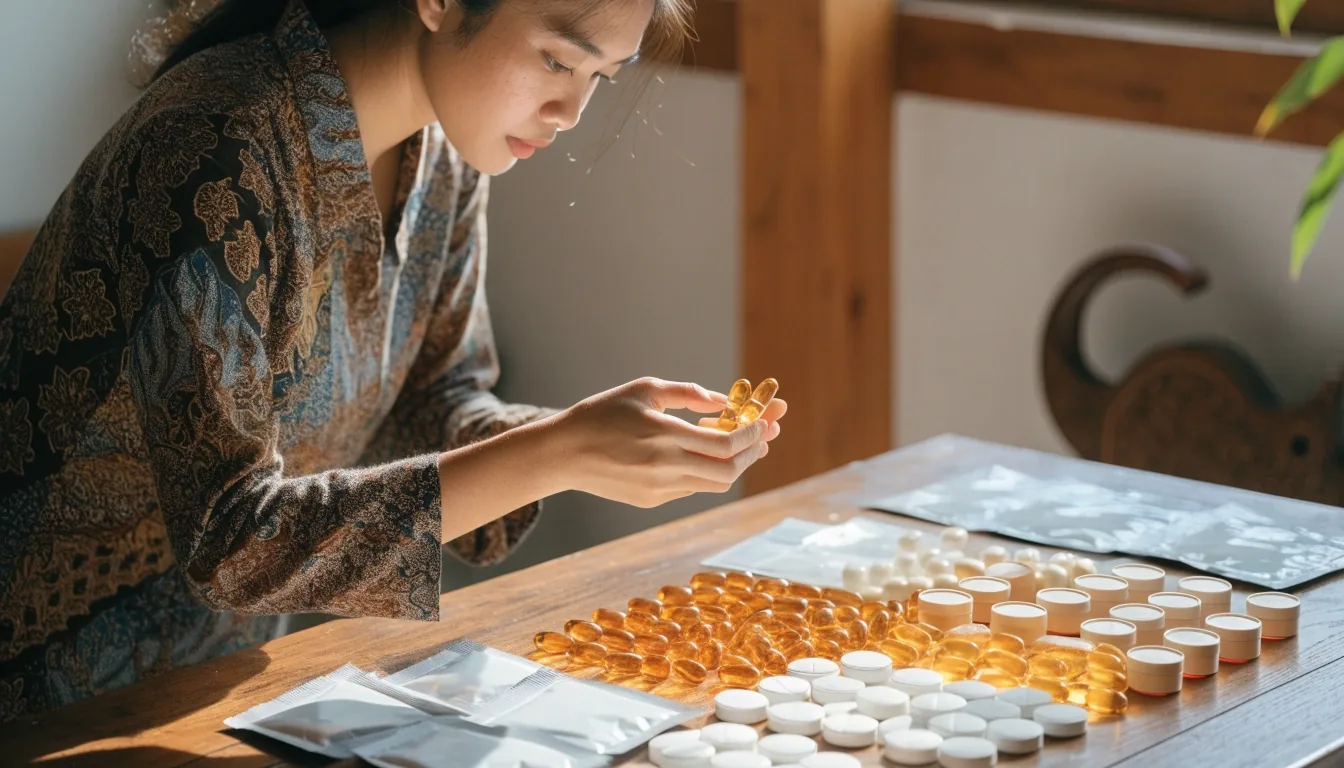
Side by side
Nutrient-led and heritage-led products share one shelf, so we read them in the same even tone.
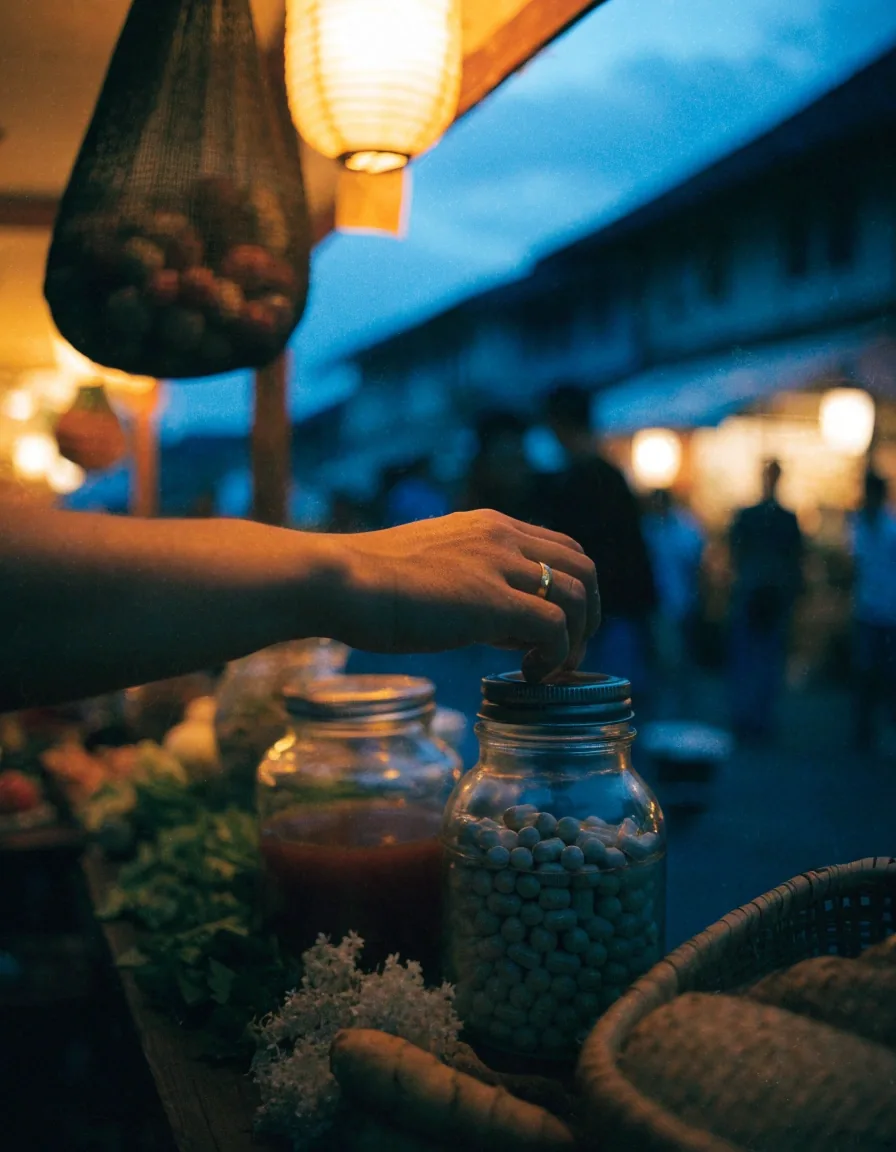
Vitamin C appears in two shapes worth knowing: a plain 1000 mg tablet, and blended formulas such as Excell-C with betaglucan, where the vitamin is paired with another familiar ingredient. Both sit in the same aisle.
Vitamin D3 and omega-3 tend to be single-nutrient products, which makes them easy to explain but easy to overlook until you know your routine. Herbal jamu products compete in the same shop but carry a different story, one rooted in tradition rather than nutrient numbers.
Understanding that split, nutrient-led versus heritage-led, explains a lot of what you see when you look at a wellness shelf in Indonesia.
Premium imported multivitamins are visible in marketplace rankings and pharmacy displays, often priced above local equivalents. Local heritage brands answer with recognition and price accessibility, which matters when you buy for a whole family rather than one person.
Heritage shelf
Decades on the shelf
Recognition, family familiarity and a price that makes buying for several people at once realistic.
Imported shelf
Premium positioning
Higher price, strong marketplace visibility, and often a single-nutrient format that is simple to slot into a routine.
What builds trust
Familiar and readable
Neither side wins on trustworthiness by default. What actually builds trust is familiarity, a clear format, and a label you can read without a translator.
Our brand notes page treats both camps with the same factual tone, because a jamu blend and an imported softgel are simply different answers to the same question.
Everyday context, not clinic promises
Consistency beats intensity, and a routine you can repeat is worth more than a shelf you admire.
We keep the language grounded on purpose. Our pages describe format, ingredients and shelf position, not outcomes. If you take an omega-3 softgel or a vitamin D3 capsule regularly, that belongs in a routine conversation, not a medical one.
The people who keep a supplement routine going for years are rarely the ones with elaborate systems. They attach a product to something they already do without thinking: breakfast, a commute, a vitamin C tablet next to the toothbrush.
For anything involving a diagnosed condition or a prescription, talk to a qualified professional. This site is a reading aid for shoppers comparing familiar Indonesian products.
Nothing here requires an account, and nothing sends you to a checkout. Start wherever your question is.
Use the comparison page if you already know a few product names and want them laid out beside each other by format and ingredient family. Compare familiar products.
The ingredient and format guide explains what sits inside a softgel, tablet, sachet and herbal blend without the marketing layer. Read the format guide.
The daily routine builder places whatever you choose around meals, work hours and travel. Build a daily routine.
The buying checklist is the final step before money changes hands, covering expiry checks and label reading. Check the buying checklist.
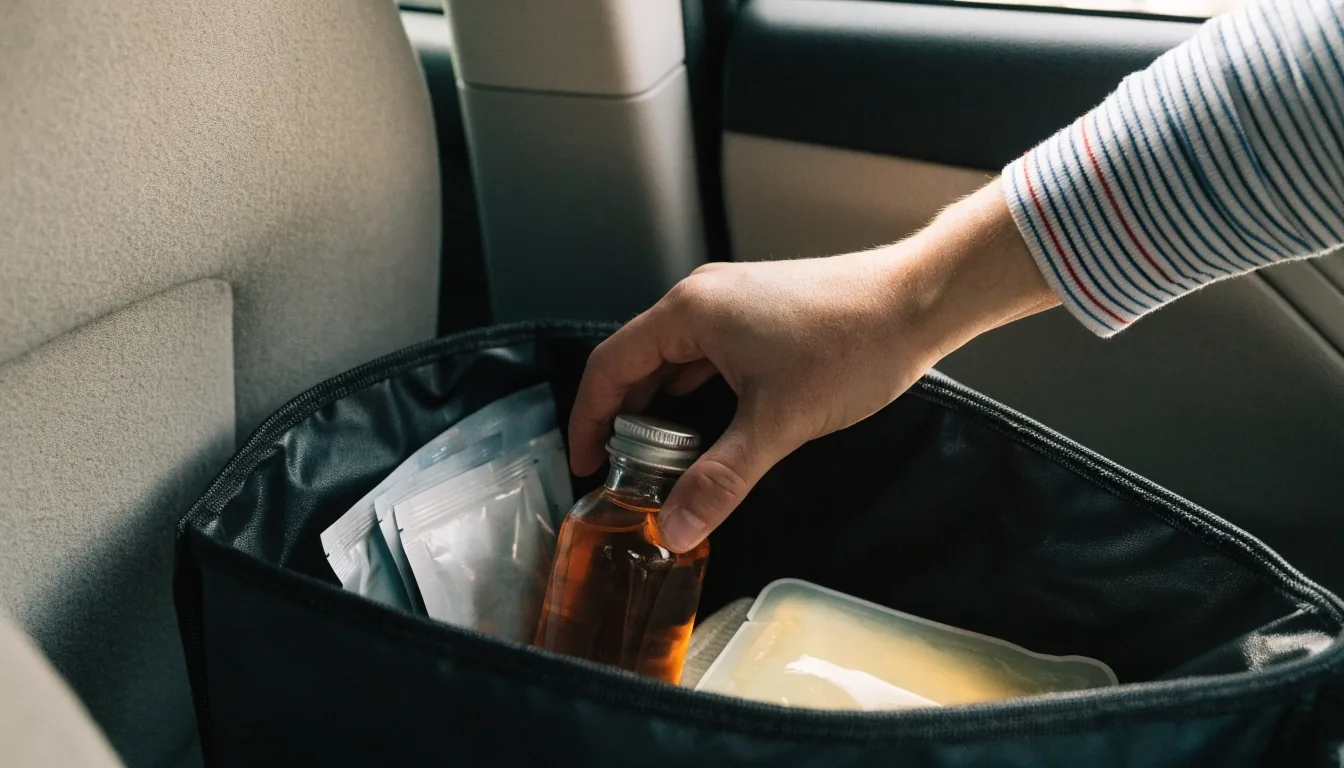
Indonesia's climate shapes how you store anything. Softgels and tablets cope better away from direct sunlight and out of a hot car, and a bathroom cabinet above a steaming shower is a poor home for most formats.
Keep the original container and the leaflet, which is where the manufacturer's storage instructions and expiry date actually live. Sachets are usually the most forgiving in a bag, which is part of why so many herbal and probiotic products use them.
The buying checklist page covers expiry checks and label reading in more detail.
The short answers we give most often on the shelf floor. Longer ones live on the questions page.
All questions and answersSoftgels and tablets are simple because they need no preparation. Sachets are easiest while travelling, since they survive a bag and mix into water. The format that fits your existing habit tends to be the one that lasts.
Imported brands like Blackmores are positioned in the premium segment and rank highly in marketplace multivitamin sales. Local heritage names such as Tolak Angin lean on decades of recognition. Both sit in the same retail aisles.
Retailers stock what shoppers search for by name. These three are single-nutrient or near-single-nutrient categories with clear formats, which makes them easy to display and easy to compare across brands.
Yes. Jamu's heritage, including brands active since the 1950s, keeps it in mainstream shopping. It competes on tradition and familiarity rather than on nutrient labelling.
Before you spend money
Start with the comparison, end with the checklist.
If you want a straight comparison of familiar products, the comparison page is the fastest route. If you are building a habit from scratch, the daily routine builder walks through timing and travel.
The brand notes cover both local heritage names and imported premium brands in plain terms. If a label question is still open, the guide breaks down formats ingredient family by ingredient family.
Questions about the reading room itself? Reach us at [email protected] or call +62 361 788 802, Monday to Friday, 9:00 AM – 6:00 PM. Our writing desk sits at Jl. Sunset Road No. 88, Seminyak, Kuta, Badung, Bali, 80361.