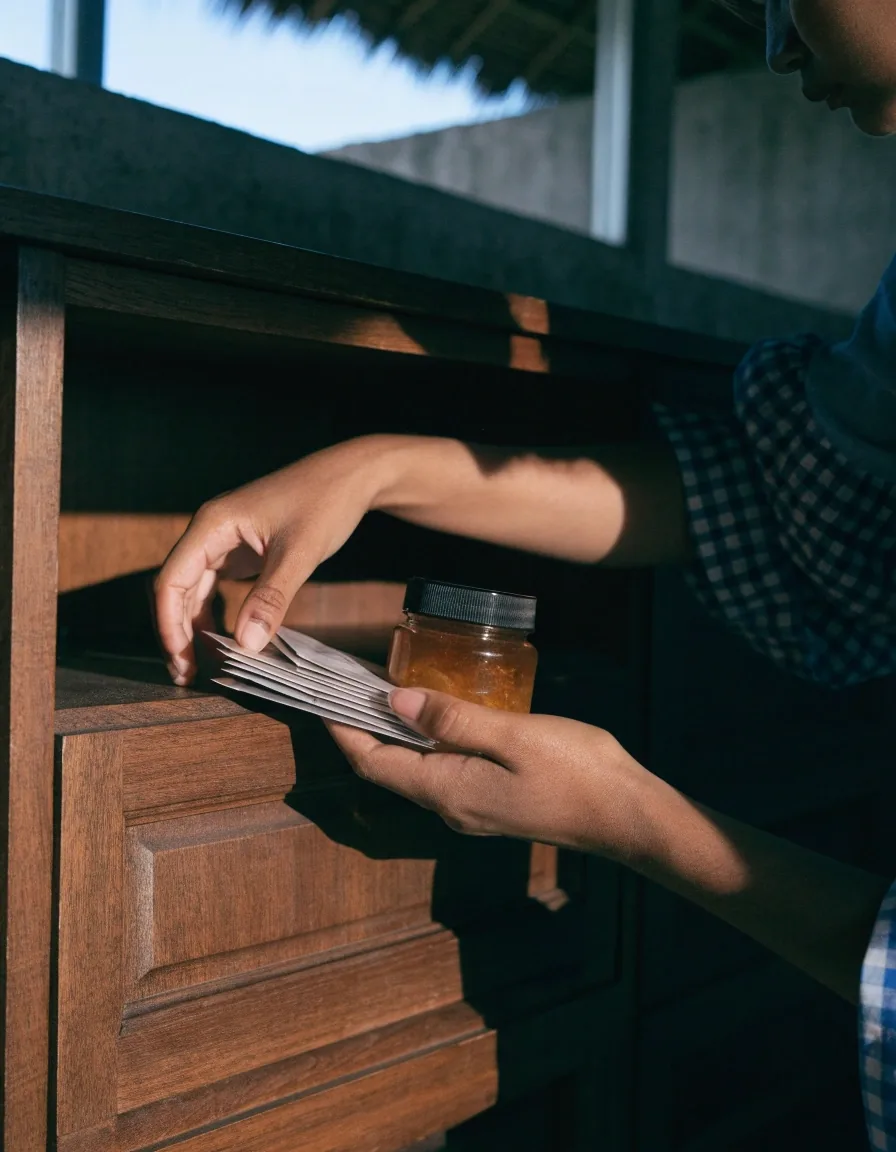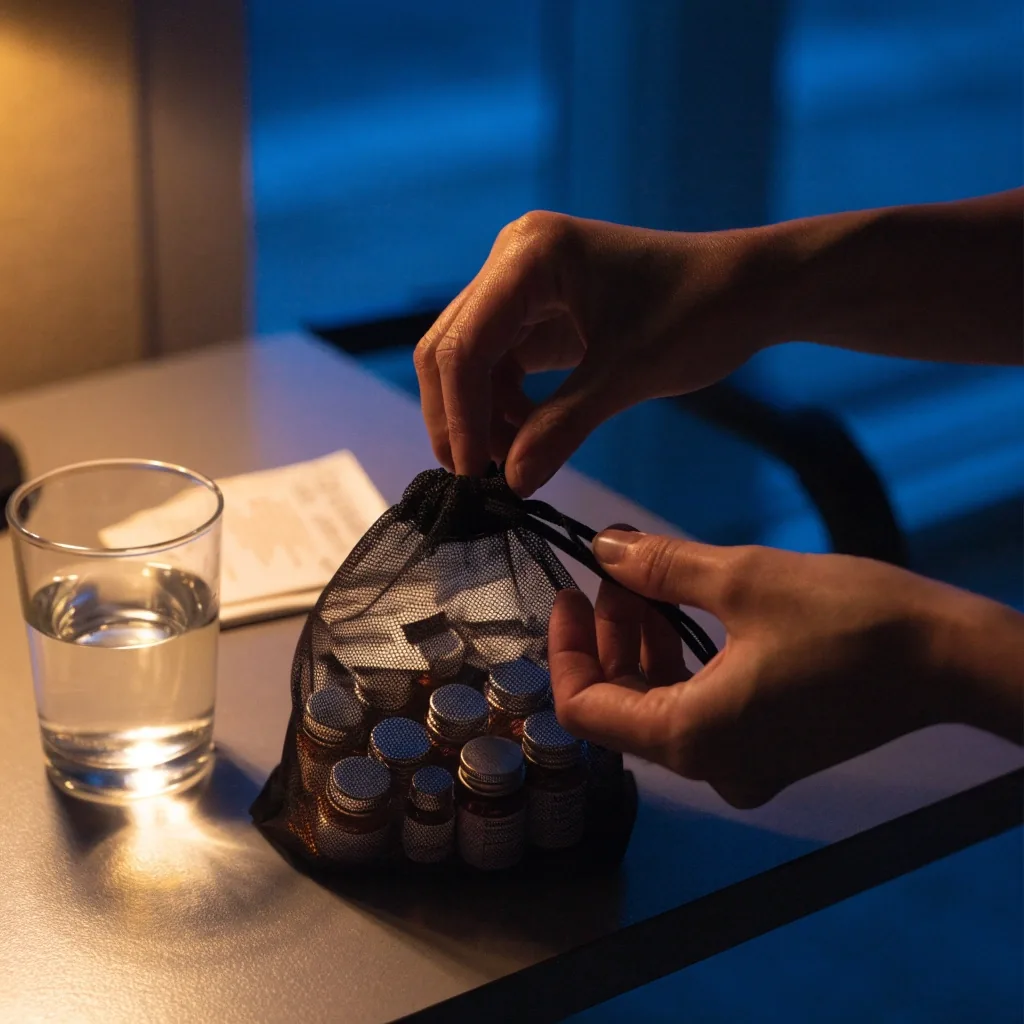
An amber bottle of a herbal blend and a small pouch of sachets resting on a linen cloth by a dusk window ledge

Daily routine builder

A supplement routine that survives a real week

Most routines break on traffic, travel and heat — not on the product. This builder attaches products to meals you already eat, gives each one a place to live, and keeps the whole arrangement intact when you are away from home.

Format
Softgel + sachet
Routine
With first meal
Place
Cupboard, not bathroom
Season
All year

The whole point of this arrangement: every product rides a meal you were already going to eat.

The slot rule

Attach products to meals you already eat

One rule decides whether a routine lasts a month or dies in the second week: the product must not need its own moment.

Meals are the anchor. Products ride along.

The single most useful trick is to stop inventing a new time of day. If you eat breakfast, that meal is your slot. Softgels such as vitamin D3 1000 IU and omega-3 1000 mg are typically taken with food, so breakfast or lunch absorbs them with no extra effort. Vitamin C tablets fit the same pattern.

The goal is that taking the product requires no decision, only the meal you were already going to eat. Once a product needs its own separate moment — a specific clock time, a glass of water fetched from another room, a ritual that exists on no calendar — the dropout rate rises sharply. You are not building a schedule. You are borrowing an event that happens anyway.

Breakfast

Vitamin D3, omega-3 and any vitamin C tablet with food — one moment, three products if you want them.

Anchored to your own morning

Lunch, if it is consistent

The same logic at midday, provided you are near your products. Keep a small strip in a work bag and it holds.

Only if the meal is reliable

Morning, midday, evening — what fits where

Pick slots by your actual week, not by an ideal one. Three bands of the day, three different jobs.

Morning suits anything taken with food

First meal

This covers most softgels and tablets. Breakfast is the least interrupted meal for many households, which makes it the safest first anchor. If your morning is a rush, do not fight it — move the anchor instead.

Midday works if lunch is consistent

Office slot

Midday only works when you keep the products at the office or in a bag you actually carry. This is the slot most people overestimate. If your lunch moves between 12 and 2, it is still a slot — just keep a strip where the decision happens.

Evening suits what you would rather not carry

Home slot

Often the most stable slot because people are home. Multivitamins and blended formulas go wherever your most reliable meal is — a serving size of more than one unit per day needs a moment you will not skip, so the anchor matters more than the hour.

Three unbranded daily supplement formats lined up on a linen cloth: a softgel, a tablet and an open sachet of herbal powder

Match the format to the band

Softgels and tablets sit comfortably in morning and midday slots. Sachets and blends belong where you already keep a glass of water.

Pick by your week, not the advert

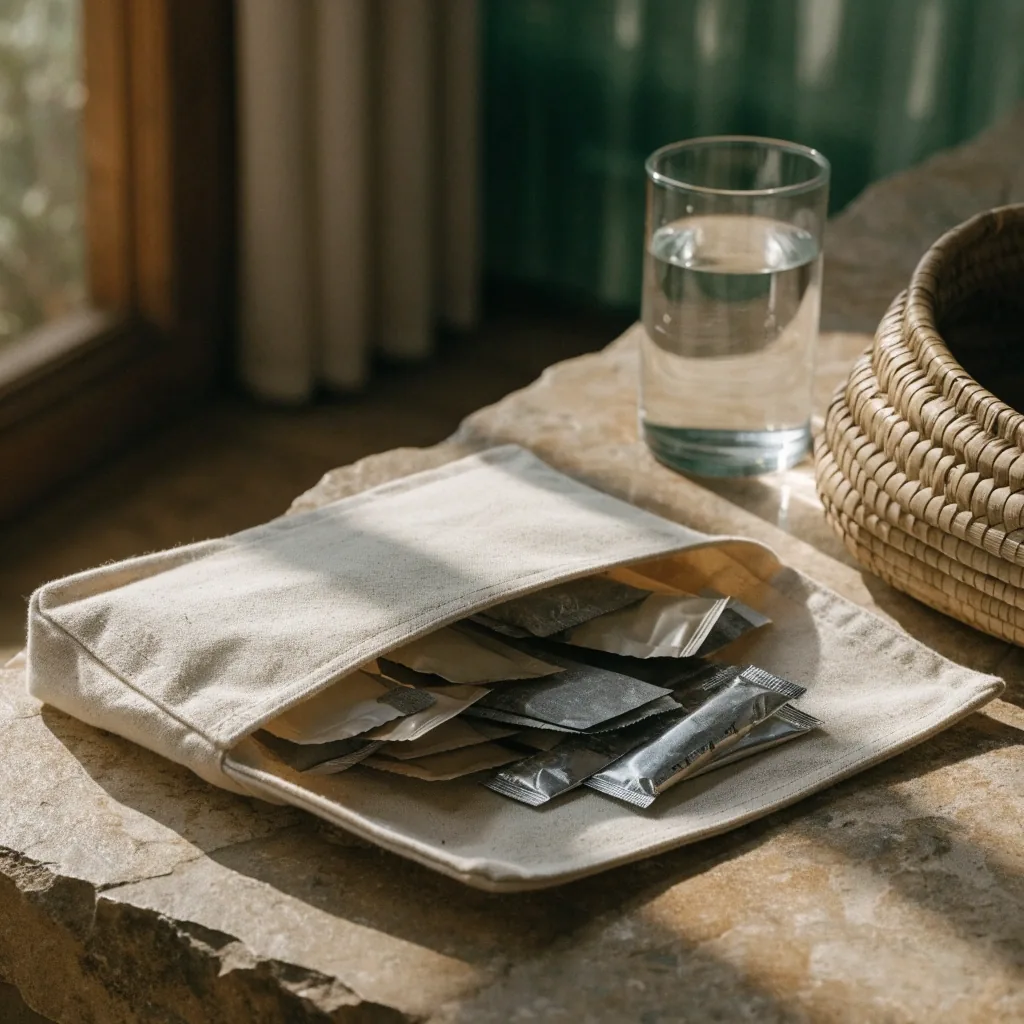
An open canvas travel pouch with unbranded sachets and softgel strips on a stone counter beside a glass of water

Travel weeks

Sachets and the travel case

If you move between cities or islands regularly, sachets solve a real problem. They are single-serving, need no bottle, and mix into water, which is why herbal blends and probiotic powders commonly use them. Nothing leaks in a bag, and there is no half-empty container to remember.

Build a small travel pouch with a few days of sachets and a couple of softgel strips, and the routine continues without a cabinet. It also survives the heat better than an open bottle that has been sitting in a car all afternoon.

Counts itself

Sachets count themselves. If the box has 30, that is 30 days, and you can see exactly when you are running low.

Bag friendly

No bottle to pack, no spill, no weighing. A single pouch replaces the shelf for a week away.

Keeping it going for years, not weeks

Long term wellness supplements only make sense as a long term habit, and long habits are boring by design. Three habits keep a routine alive past the first month:

Habit one

Own fewer products

People who keep a routine for years tend to own two or three products rather than six. Every extra product is another decision, and decisions are what break first.

Habit two

Keep them in one visible place

A shelf inside a cupboard that you actually open beats a better spot you have to remember. Visibility, not storage quality, is what keeps the routine on track.

Habit three

Re-buy before the pack runs out

Running out is the most common exit point. Note the pack size and how many units you take per day, then add a reminder about a week before the pack ends. Nothing else in this routine needs tracking.

A closed cupboard shelf holding unbranded amber jars of herbal blend and a carton of sachets beside a folded linen cloth

Storage in a hot, humid climate

Heat and humidity are the two conditions most worth managing in Indonesia. Keep products out of direct sunlight, out of parked cars, and away from the bathroom shelf above a shower. A closed cupboard in a living area is usually better than a kitchen shelf next to the stove — heat rises off the cooktop even when you are not standing there.

Keep

Original container and leaflet. That is where the manufacturer's storage instruction and expiry date live — and the leaflet is also the authority for missed servings.

Compare

Softgels and tablets cope well in a cupboard. Sachets are the most forgiving in a bag — heat and humidity affect them least while you are moving around.

When work hours shift, anchor to the first meal — not to a clock

Shift work, late meetings, and travel weeks all break fixed times. The practical response is to anchor the routine to the first meal you eat, whatever hour that happens to be, rather than to a clock. If you take a softgel with food, the first real meal of your day works whether it is at 7am or 1pm. Products that need a consistent slot, like a multivitamin with a serving size above one unit, can move to the meal that varies least in your week rather than the one that comes first.

If you are figuring out which day of the week is genuinely stable for you, it is worth writing down your last two weeks before you commit a slot. Most people are surprised by which meal actually repeats. Check the buying checklist.

A simple starter arrangement

Four moves that cover a normal week for most people. Add nothing else until this version runs for a month without a gap.

Breakfast anchor

One softgel with breakfast

Vitamin D3 1000 IU or omega-3 1000 mg — both are typically taken with food, so the meal does the work. Choose the one you can buy consistently where you live.

Runs on a decision you were already making.

Second product

A vitamin C tablet with the same meal

Only add a second product once the first one has held for a few weeks. Stacking both at once makes it harder to tell which one you actually keep.

Same meal, one extra unit, no new moment.

Home and away

A sachet in the work bag for days away

Counts itself and survives the heat better than an open bottle. Refill the pouch when you refill the carton at home — same action, one reminder.

One pouch replaces the shelf for a week away.

Home slot

A herbal blend at a fixed moment you already have

A position at home is the readiest slot in most weeks. Tie it to a habit you already run — the last glass of water before bed, or the moment you sit down after work.

An existing habit, not a new one.

This arrangement is deliberately modest. If you want to see how different everyday formulas compare on format, serving size and daily fit before you commit, the supplement comparison lays the familiar options side by side, and the ingredient and format guide explains what each format actually is.

An amber glass pipette glowing above a stone dish of dried root shavings, backlit in a dim pantry corner

The leaflet is the authority

Storage instructions and expiry dates live on the pack you actually bought. Read it once when you open the box and you will know what it says about missed servings before you need it.

For every product, every time

Busy months

What to do when you miss a day

Missing a day is normal and the routine should absorb it without collapsing.

Do

Continue at the next scheduled moment

The next meal you were already going to eat is the next chance. Waiting for the right time to restart is what ends routines — not the miss itself.

Don't

Double up without checking the leaflet

The simplest approach is to continue with the next scheduled moment rather than doubling up, unless the leaflet says otherwise. Read it once and you will already know.

What actually matters

A routine that demands perfection will not survive a busy month, and a routine that tolerates a gap usually does. If you have kept your first product running for a month and it survived one missed morning, you have already proven the mechanism. Adding the second product is easier after that.

Questions we get about daily routines

Short answers to the three things people ask most when they are setting up an everyday supplement routine.

Should I take vitamin D3 and omega-3 at the same time?

Both are softgels typically taken with food, so pairing them at one meal is a common and convenient approach. Follow the leaflet for the specific products you have.

What is the easiest format to keep while travelling in Indonesia?

Sachets. They are single-serving, need no bottle, and survive a bag. Many herbal and probiotic products use this format for exactly that reason.

How do I stop forgetting to re-buy?

Note the pack size and how many units you take per day, then set a reminder about a week before the pack ends. Running out is the most common point where routines stop.

Next step: read the pack you already have

Before you buy anything else, pick up the products already in your cupboard and read the leaflet for one minute. You will know what the missed-serving guidance says and how many units a day is expected. That single habit makes the rest of the routine easier to hold.

Want to decide between two familiar everyday formats first? The brand and product notes cover heritage and imported options on the same terms.